The Joy of Trading. The Confidence of Knowing.
Designing the world's first gamified trading platform.
The challenge
Retail investing platforms were technically advanced but cognitively inaccessible. For most people, financial systems communicated in abstractions—charts, jargon, and metrics optimized for professionals. The result wasn’t just a lack of access, but a lack of confidence. In fact, our initial research painted a stark picture of this disconnect:60% of participants graded the financial services industry with a C, D, or F.
Understanding behavior before designing systems
Before a single interface was designed, we focused on how people actually think about money, risk, and decision-making. We explored this through a mixed-method program combining quantitative surveys, in-context ethnographic interviews, and behavioral observation during real investment decisions. We discovered that trust was personal, not institutional.76% cited close relatives or friends as their primary trusted advisors.
 Participants spanned experience levels, income brackets, and professional backgrounds. What we found was that the problem wasn’t motivation—it was cognitive friction. However, we found a powerful lever for engagement:
87% stated they were more confident investing in brands they use and love.
Designing for confidence, not just engagement
To validate how people learn and gain confidence over time, we introduced a controlled experiment: a week-long simulated investing competition. Participants built stock portfolios using a simplified interface while the system captured behavioral signals. We tracked time to decision, the use of research tools, frequency of portfolio checks, and comparison behaviors.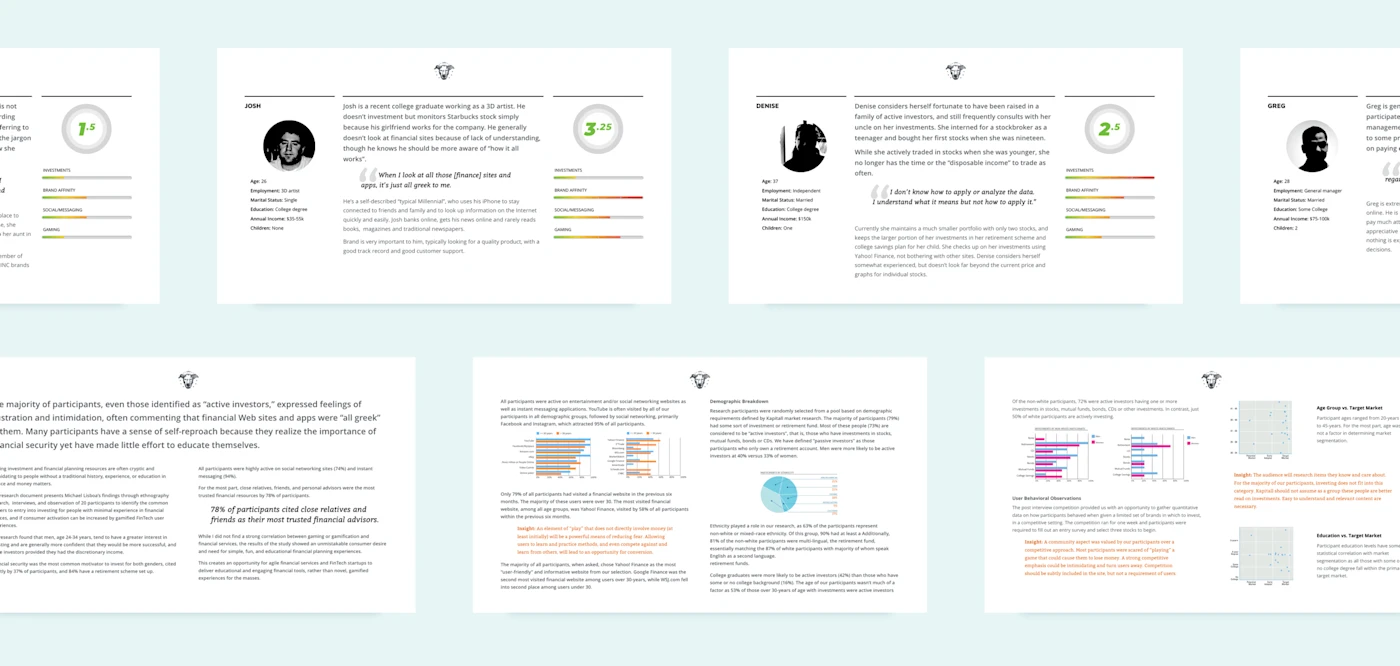
"Why stare at a line chart when you can play with the brands you love?"
System design: progressive intelligence
We designed the platform architecture around a single core principle: Expose complexity only when the user is ready to use it. Instead of traditional financial dashboards, we introduced a progressive system anchored around familiar Brand Chips and a proprietary Consolidated Score Algorithm that translated multiple financial signals into a single, intelligible decision cue. This enabled users to explore, compare, and analyze investments through direct manipulation without needing fluency in financial jargon. A key architectural decision was to adapt the "Heads Up Display" (HUD) pattern common in gaming design.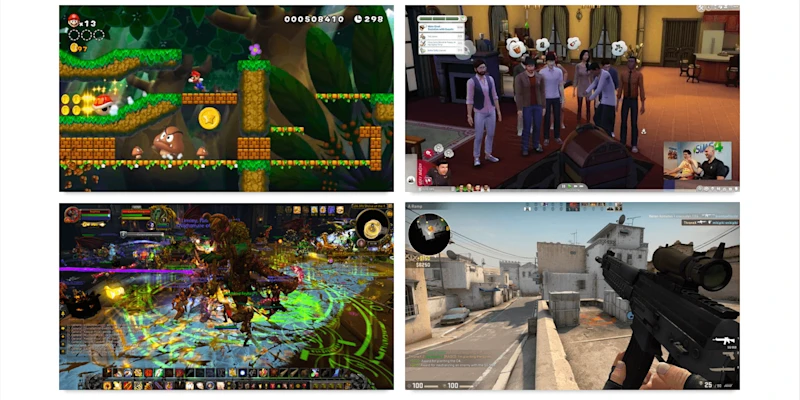
This provided users with a persistent, ambient awareness of their portfolio health and system status, ensuring that critical information was available at a glance without cluttering the primary decision-making workspace. This reduced the cognitive vigilance required to monitor positions, allowing users to focus entirely on opportunity analysis.
A user might drag Nike and Adidas into comparison, see Nike's momentum advantage, and add it to their portfolio—without ever seeing a traditional chart.
Usability testing as system validation
Multiple high-fidelity prototypes were tested throughout development. Beyond just task completion and error rates, we measured cognitive load and feature discovery to ensure the system was successfully building confidence. Testing revealed users didn’t distrust complexity—they distrusted opacity. Each iteration reduced friction, improved comprehension, and reinforced trust in the platform’s feedback loops.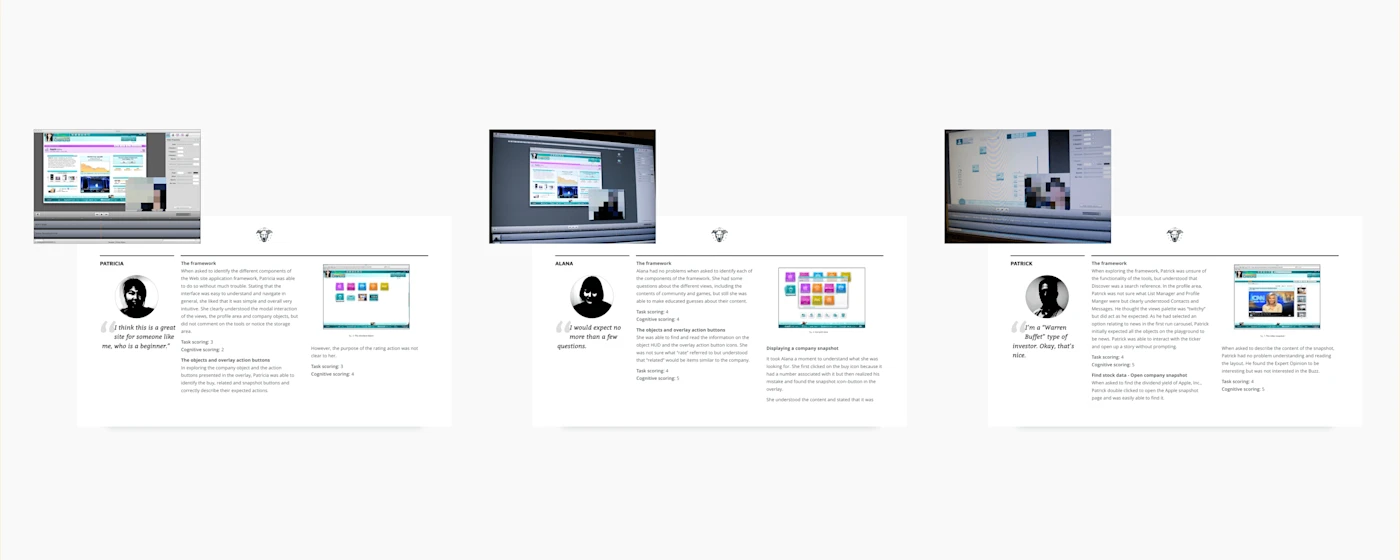
The result
Kapitall launched as a new category of trading platform—one that treated investing as a learnable system rather than an exclusive discipline. By reframing how people understand and interact with financial data, the platform enabled users to explore, compare, and invest with increasing decisiveness—without sacrificing rigor. Kapitall became the world’s first drag-and-drop trading platform designed explicitly around cognitive understanding."Alucrative worked very well with our company and delivered a very slick product on time. The team also really helped us with strategic marketing research to form our brand. We wouldn't be the same without them."
— David Neubert, Co-Founder, Kapitall
Outcomes
Create
What's
Next.
Ready to ship? Let's talk scope.
Email us
© 2026 Alucrative
| |