Tiger. Rabbit. Dragon. Snake.
What This Actually Is
This is a four-year experiment in shipping under constraints. Every Lunar New Year, feeds fill with lazy red-and-gold posts shouting "Gong Xi Fa Cai!" from brands that lack the creativity or resources to do something worth sharing. It's better to not post anything than post shit for the sake of posting shit. For four years running, we've used Chinese New Year as our excuse to build something we'd actually be proud of. Not client work. Not spec work. Just experiments that let us test ideas, break things, and figure out what works—on our own dime, on our own time. Each year tests a different design belief. Every result feeds client work downstream.2022 / Year of the Tiger
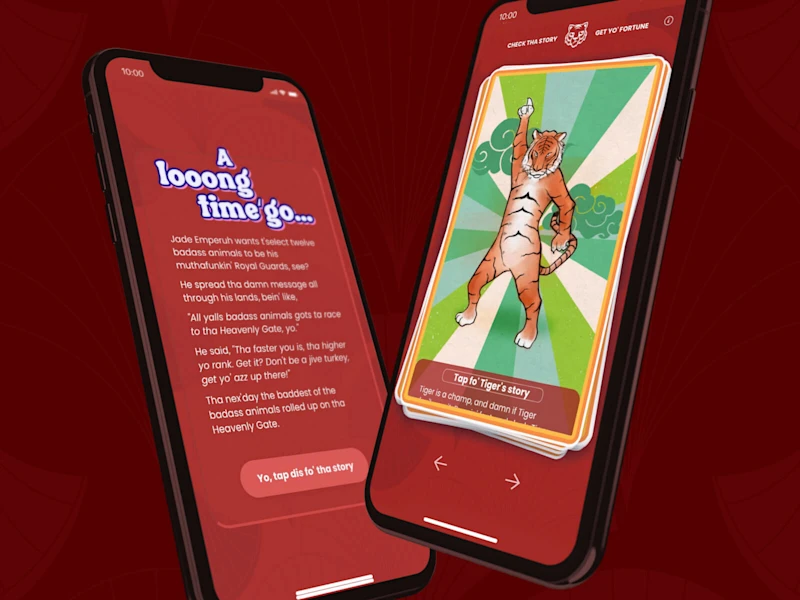
Lesson: Velocity is a Design Choice 1. The ConstraintThe challenge was unforgiving: seven days to build a complete fortune-telling platform. Not a landing page, but a real product with twelve zodiac characters, personalized fortunes, and a social layer. We had a full client workload and zero forgiveness for sloppiness. 2. The Call
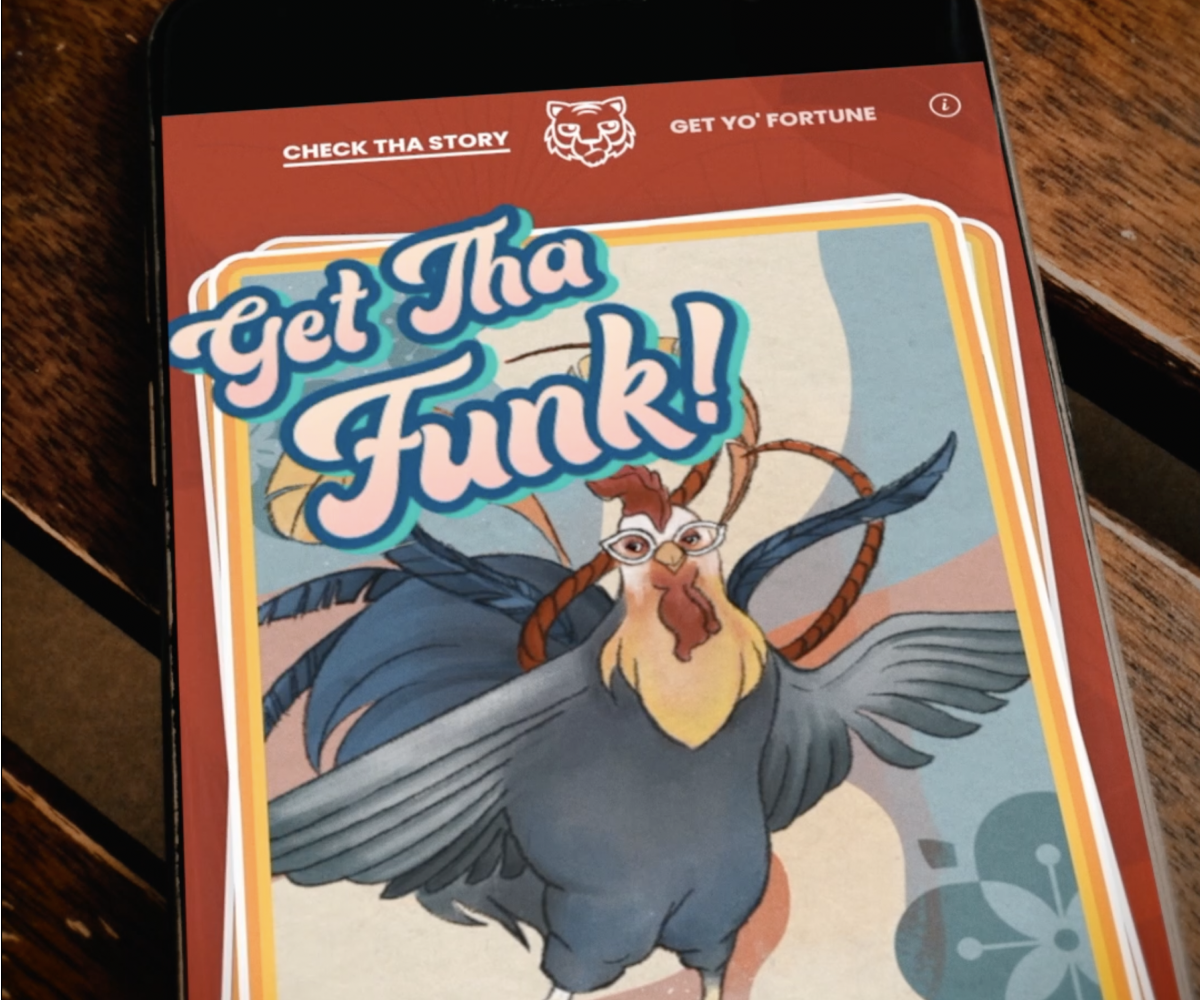
We treated this as a love letter to the 70s Black Kung Fu films and funky disco culture from Michael's childhood. We called it 幸福,繁荣和迪斯科 (Happiness, Prosperity, and Disco). Because if we're doing this, we gotta have that funk. We prioritized ruthlessly. Lock the visual language on day one. Build only what matters. Ship.
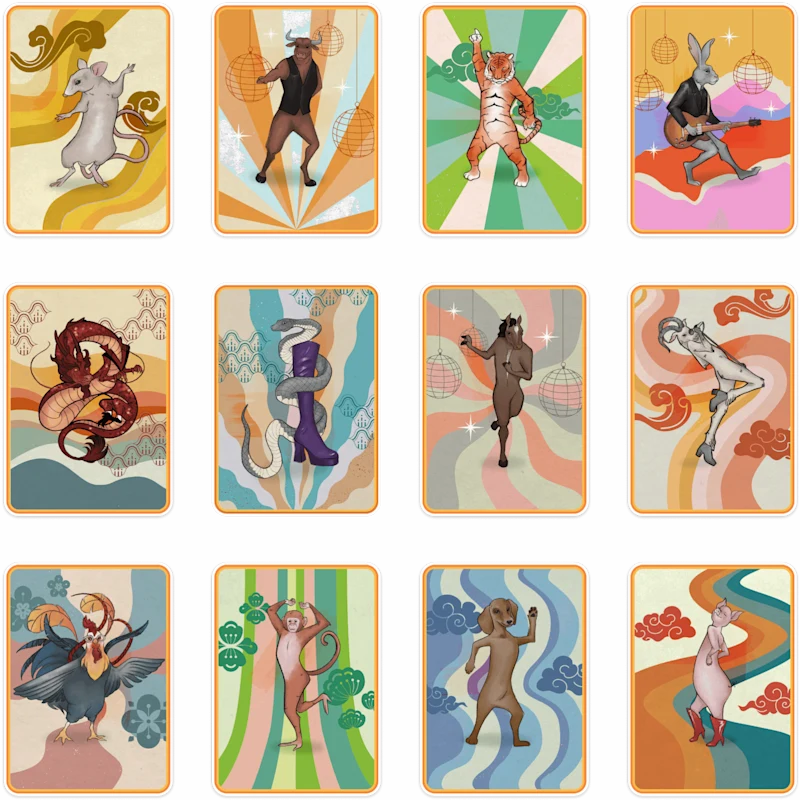
3. The System Structure was survival. Each of the twelve zodiac animals was hand-illustrated to represent famous funk and disco artists from the 70s. We built a modular character system where all animals shared the same underlying geometric structure—different textures and personalities, built from the same bones.
We launched on time. Users didn't just check their own fortune—they explored the entire zodiac set. This execution model now informs all sprint-based client work we do.
2023 / Year of the Rabbit
Lesson: Controlling the Chaos 1. The ConstraintBy 2023, generative AI was everywhere. We wanted to answer a harder question: can you use generative AI at production scale without losing brand coherence? The constraint was zero tolerance for brand drift. 2. The Call
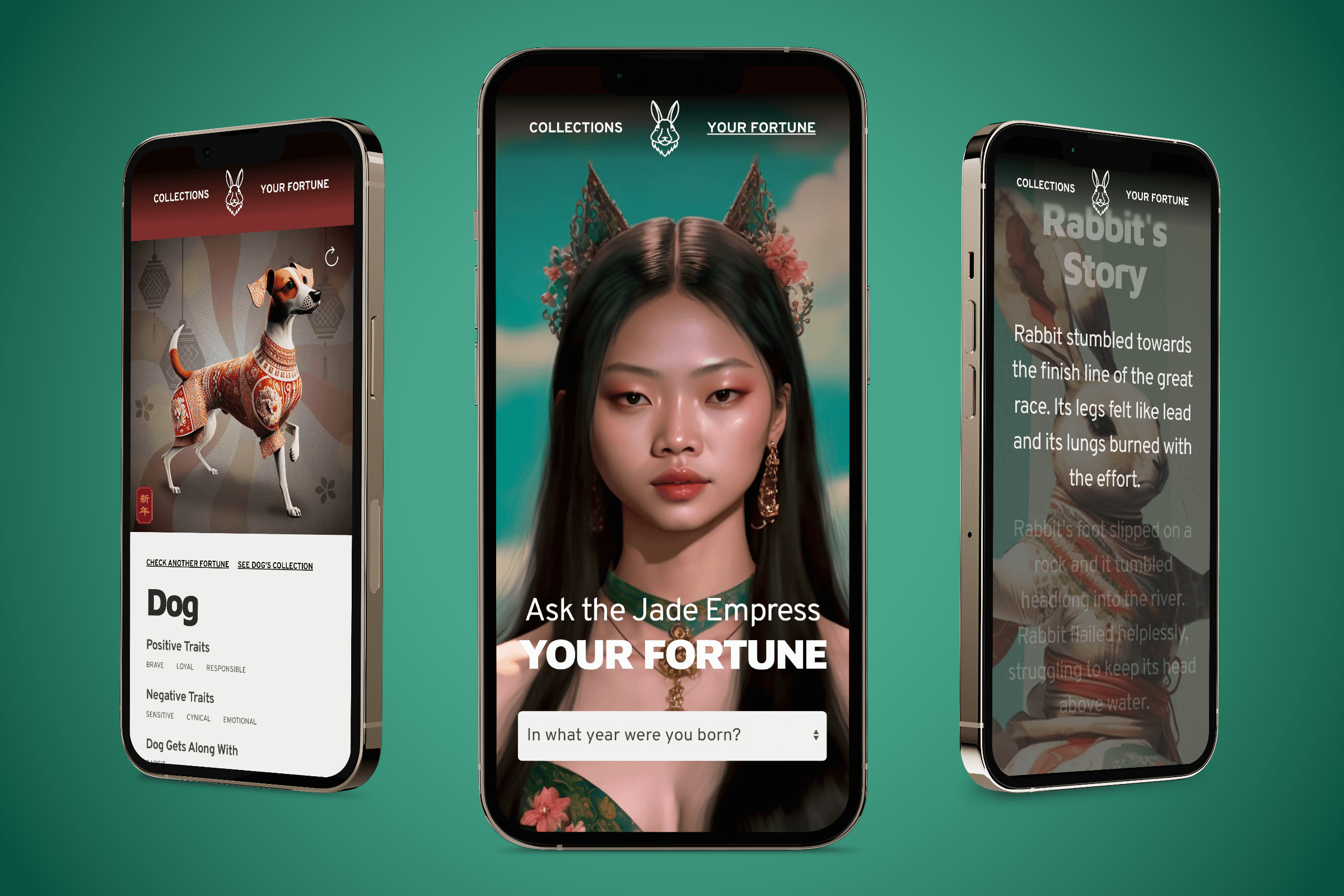
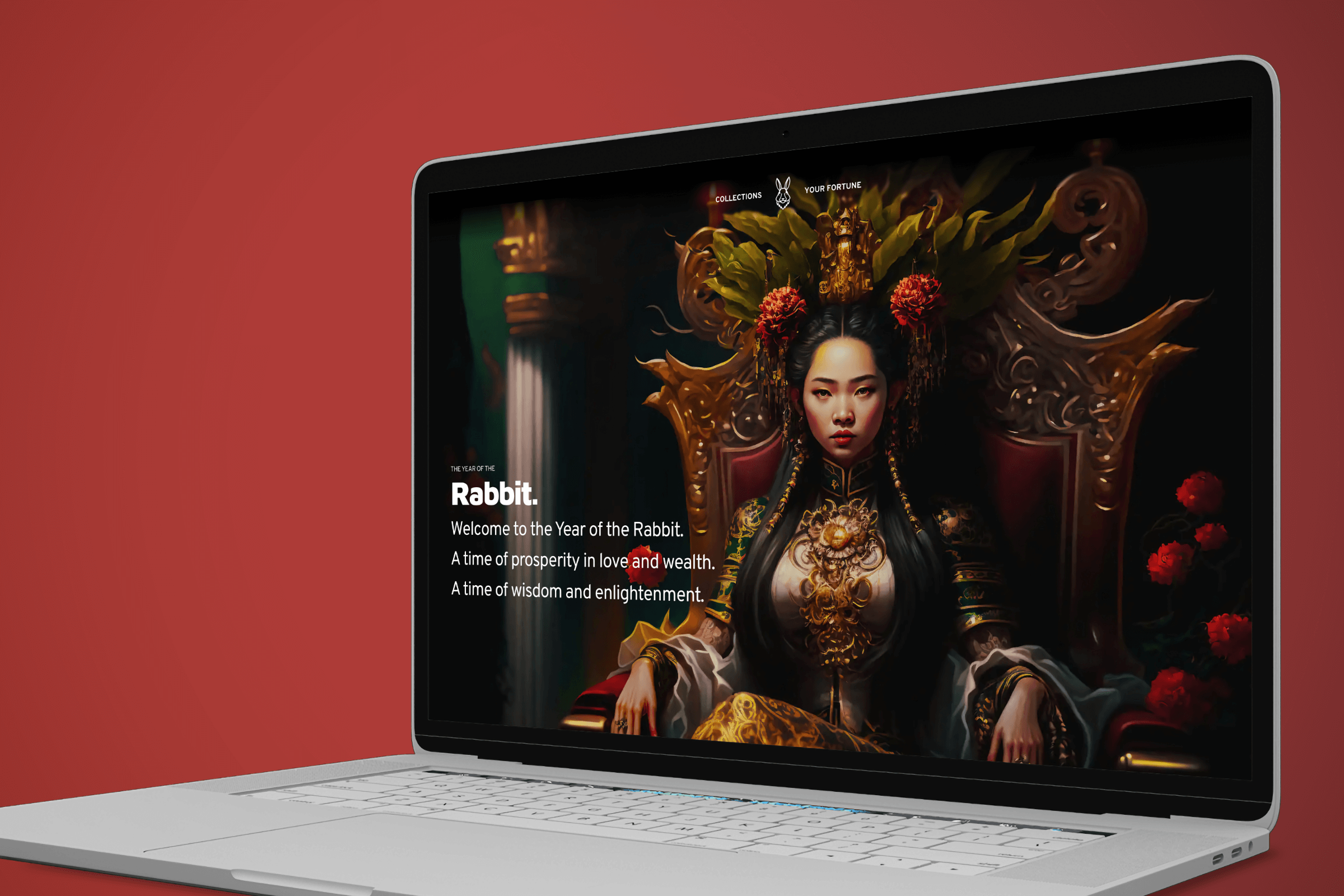
We stopped treating prompting as the solution. Instead, we built a rig. We chose constraint systems over prompt tuning. (Also, the Jade Empress was modeled after Jennie from Blackpink because someone on our team has a massive crush. We're not apologizing for that.)
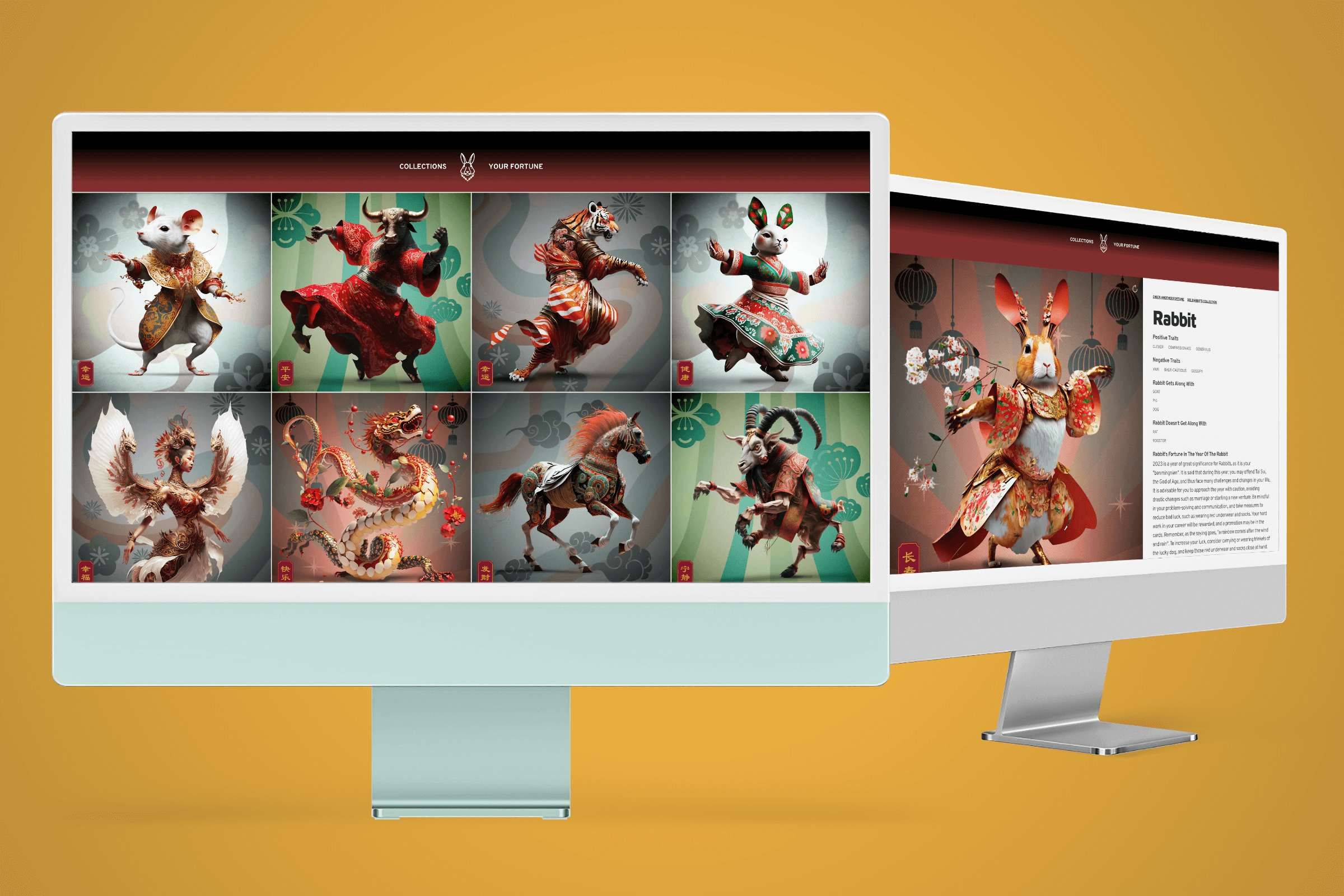
Michael wrote custom Python scripts that acted as creative guardrails, defining acceptable ranges for composition, color palettes, and style before generation even began. The pipeline was ruthless: Input → Constraints → Generation → Validation. If an asset didn't pass our programmatic style checks, it was automatically discarded. No manual review. No post-generation cleanup.
The Proof: The system generated over 100,000 unique rabbit-themed fortune cards, each visually distinct but unmistakably part of the same family.
This proved that AI can be enterprise-ready, but only if you architect the system to guarantee the output.
2024 / Year of the Dragon
Lesson: Engagement Without Rewards 1. The ConstraintWe stripped away the dopamine. No points. No streaks. No extrinsic rewards. We wanted to see if users would stick with a product purely for the narrative. 2. The Call
We bet on consequence over gamification. We designed a choice-driven journey where every decision permanently shaped the outcome. This was a risk: in an attention economy, asking users to "work" for their content is usually a death sentence. 3. The System
We built a branching narrative engine with state persistence. It wasn't magic; it was a logic tree. Every choice narrowed the path, giving the final result gravitational weight because the user had earned it.
Retention didn't drop—it stabilized. Completion rates were higher than previous "instant win" campaigns, proving that meaning is a stronger hook than cheap engagement.
2025 / Year of the Snake
Lesson: Embodiment Over Interface 1. The ConstraintThe goal was uncomfortable: minimalist UI with almost no visible controls. We wanted physical movement to be the primary input, removing the safety net of buttons. 2. The Call
We killed the tap. We designed for posture, tilt, and hesitation, accepting that the interaction would be slower. This was a maturity play: trusting the user to inhabit a moment instead of rushing through it. 3. The System
We mapped the phone's accelerometer directly to a 3D camera system. The device didn't just display the world; it became a window into it. Environmental cues replaced navigation bars.
The Proof: Users described the experience as a "ritual."
That word choice signals something shifted. The interaction felt intentional, almost ceremonial. When you engage someone's physical presence, the experience stops feeling like a product and starts feeling like a moment.
The ROI of R&D
These aren't just holiday projects. They're strategic investments. Every constraint we tested, every system we built, every late night debugging—those learnings went directly into client work. When you hire Alucrative, you're not paying for us to learn on your dime. You're inheriting four years of public experiments—the wins, the failures, the lessons we already broke our heads against. This is why our client work moves faster—because the questions were already answered in public.Create
What's
Next.
Ready to ship? Let's talk scope.
Email us
© 2026 Alucrative
| |